Kubernetes TLDR
· 6 min read


Kubernetes is a dense topic, so here are some key topics to review.
Kubernetes
Orchestration service to automate application deployments at scale.
Terraform
Infrastructure as code to deploy cloud resources that will be used to run Kubernetes.
Lifecycle

- terraform init - Set up backend and pull dependencies from providers
- .tfstate - s3
- .lock - dynamodb
- terrafrom validate - Validate Configs
- terraform fmt - lint suggestions for styling code
- terratest - Testing framework in Go
- terraform plan - Show plan to build desired state and observed state
- terraform apply - Build infrastructure to be in desired state
- terraform destroy - Clean up infrastructure
Files
- provider.tf - terraform block, backend, provider config, alias
- main.tf - Resource blocks which define resources to be created
- resource - declare new component
- data - pull resource from cloud provider
- module - pull resource from external source
- variables.tf - variables declarations for resources
- output.tf - Key values generated on successful apply
- *.tfvars - environment specific default variables
Helpers
- meta arguments - depends on, count, for_each, locals
- expressions - operators (arithmetic, equality, comparison, logical), conditionals, splat, constraints
- functions - String/Number/Collection types, encoding/crpyto/hash, IP networking, filesystem, date/time
Cluster
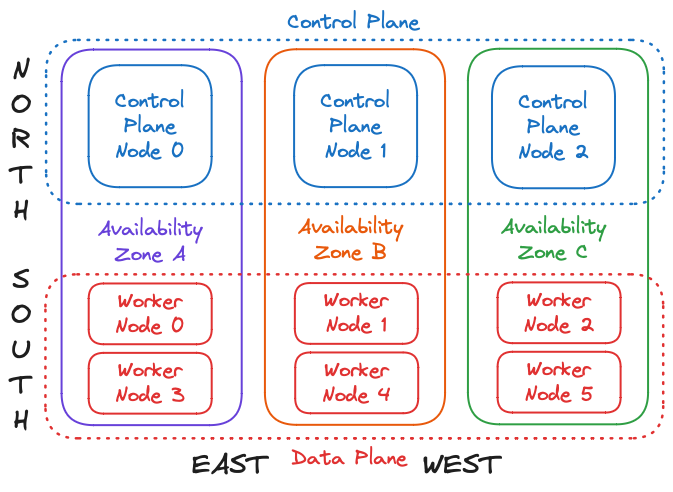
- Cluster - Multiple Control plane nodes for High Availability
- Traffic
North <-> South - Client <-> VPC <-> IngressEast <-> West - AZ A <-> AZ B <-> AZ C
Control Plane Node
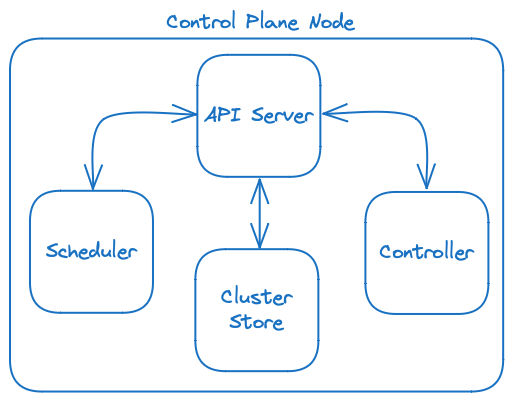
- Api Server - Front end of cluster on RESTful API over HTTPS
- Cluster Store (etcd) - Holds desired state of all components of cluster
- Controller (Manager) - Cluster intelligence, watching cluster to reconcile observed state and desired state
- Scheduler - Handles tasks and assign to capable nodes for work
Worker Node

- Kublet - Agent handles workload from cluster and reporting
- Runtime - kernel tasks using containerd to manage lifecycle
- Kube-proxy - Cluster networking and load balancing
Namespace
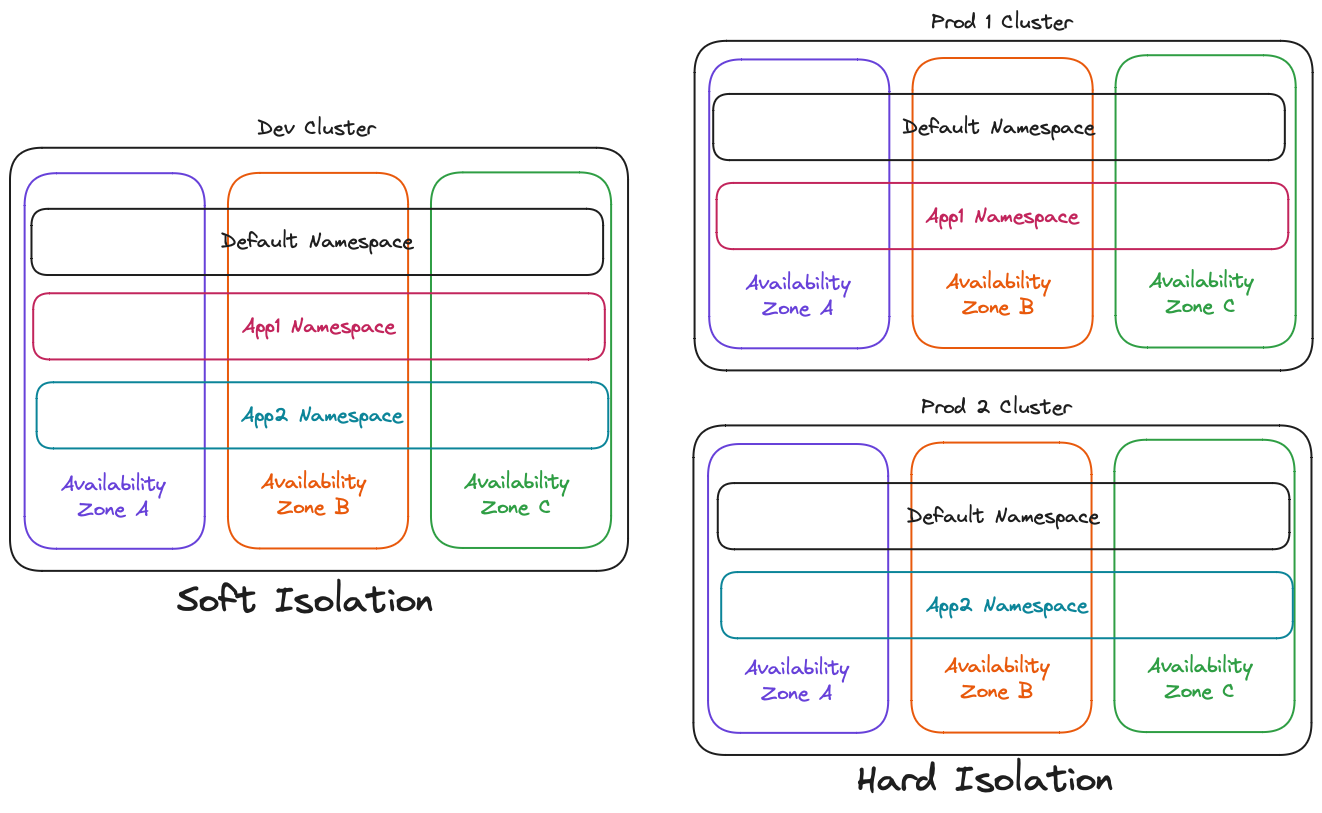
- Default Namespace - Components will be placed here if not specified
- Named Namespace - Isolate components into segmented namespaces
- Isolation
- Soft - Segment by namespace
- Hard - Segment by cluster
Component
Key atomic componentes to build applications on Kubernetes.
Pod
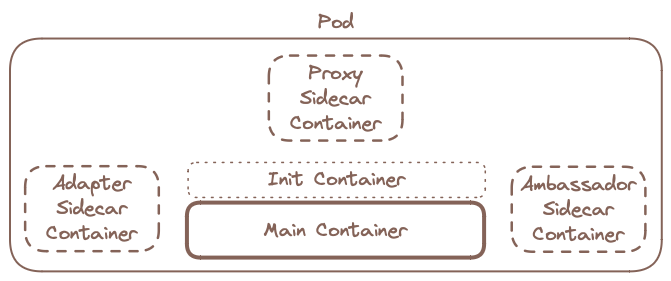
- Init container - Runs once before main container
- Main container - Core functionality of service
- Sidecar container - Optional containers to side load computation
- Proxy - Handles ingress traffic
- Ambassador - Handles egress traffic
- Adapter - Handles telemetry traffic
Config Map
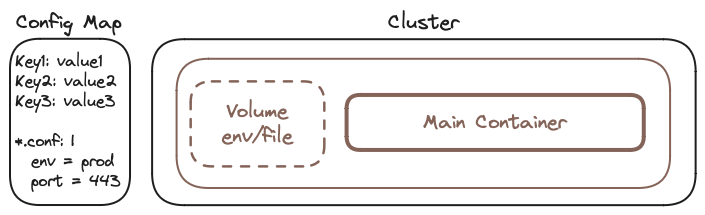
- Environment Variable - Data can be injected to container environment
- Container Argument - Pass arguments into a container status up command
- Files in Volume - Mount config file into container environment
Secrets
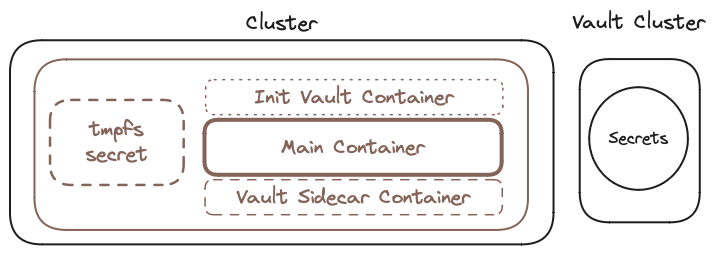
- Native Secrets - Does not encrypt in transit or flight, stores in tmpfs as base64 and decode to plain text
- Vault Secrets - Require 3rd party integration to mange secrets
Persistent Volume
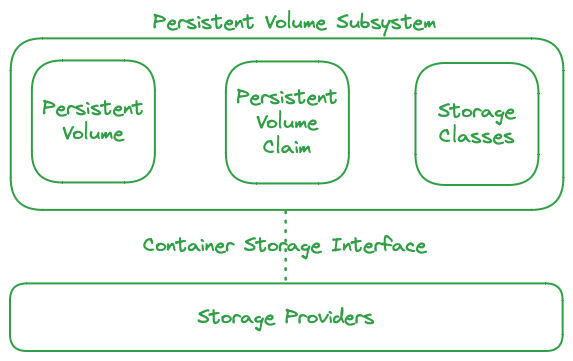
- Persistent Volume Claim (PVC) - Pod need to request/claim volume and grant access to PVs
- Persistent Volume (PV) - Maps to external storage providers
- Storage Classes (SC) - Proxy between PVC and SP and automates the connectivity
- Container Storage Interface (CSI) - Interface plugin to connect to external/cloud SPs
- Storage Providers (SP) - Physical storage disk drives
Policies
- Role-based access control (RBAC) - Regulate access to groups when invoking the API
- Pod Security Standards (PSS) - Privileged, Baseline, Restricted
- Pod Security Admission (PSA) - enforce, audit, warn
Application
Package applications into segmented resources on Kubernetes cluster.
Service
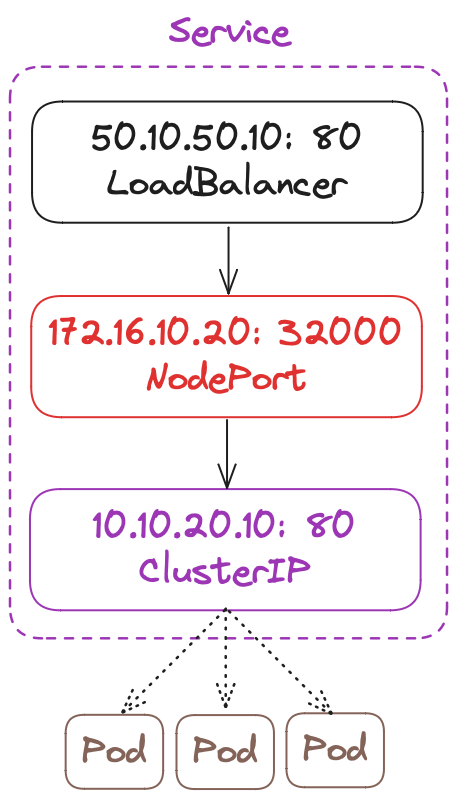
- Ingress - Handle many services on a single load balancer
- Load Balancer - Cloud load balancer to handle traffic for service
- Node Port - Port exposed on port to access service
- Cluster IP - Ip obtained from service registry for service
Service Registry
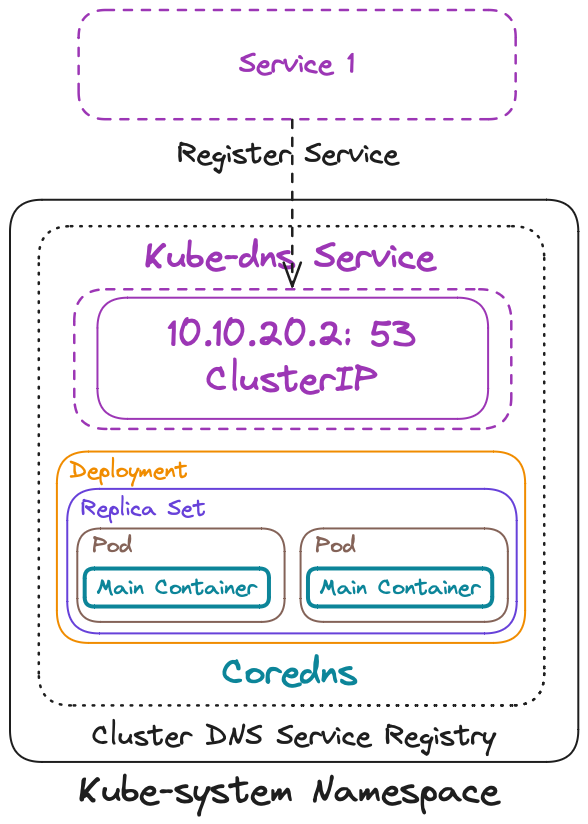
- Kube-system (NS) - Cluster namespace for control plane
- Kube-dns (SVC) - Service registry and discovery
- Coredns (POD) - Application to handle dns traffic
Service Discovery
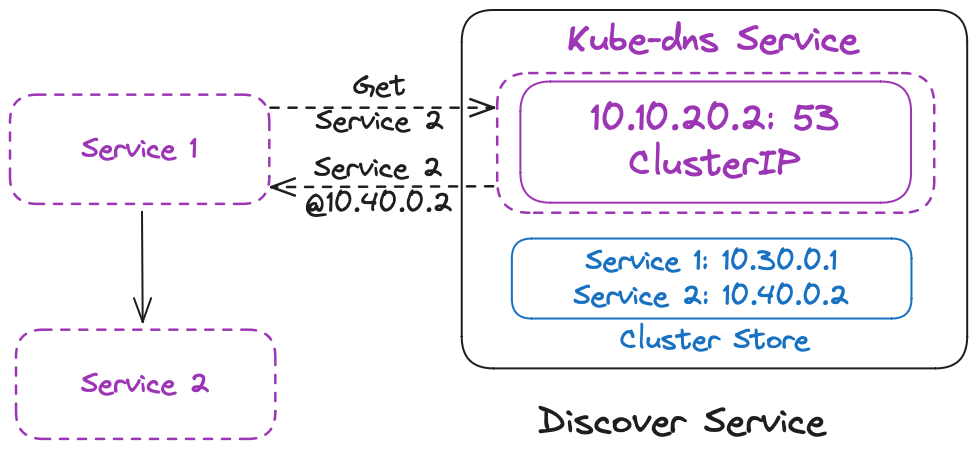
- Cluster Store - Stores DNS records from coredns
Fully Qualified Domain Name (FQDN) - {service}.{namespace}.svc.cluster.local
Deployment
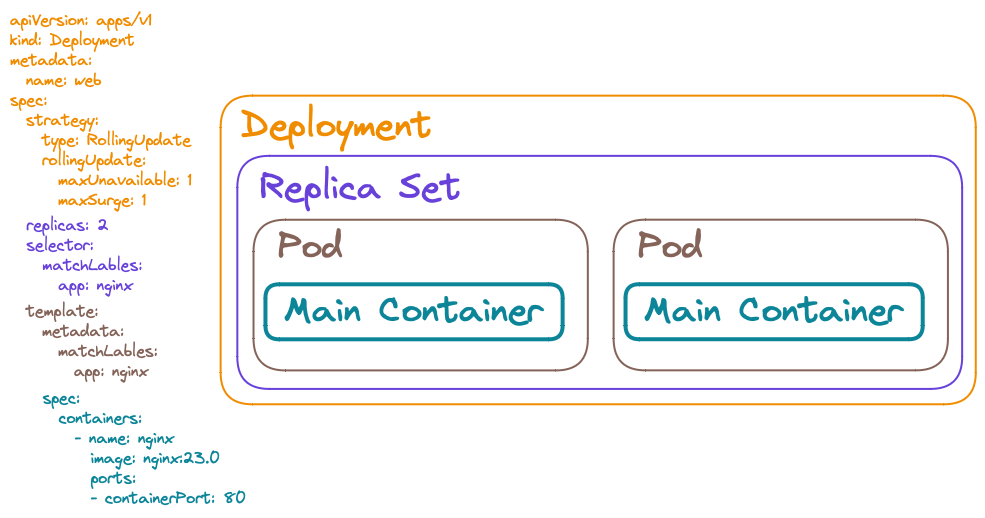
- Deployment - Stateless application
- Replica Set - Deploy multiple pods in parallel
Stateful Sets
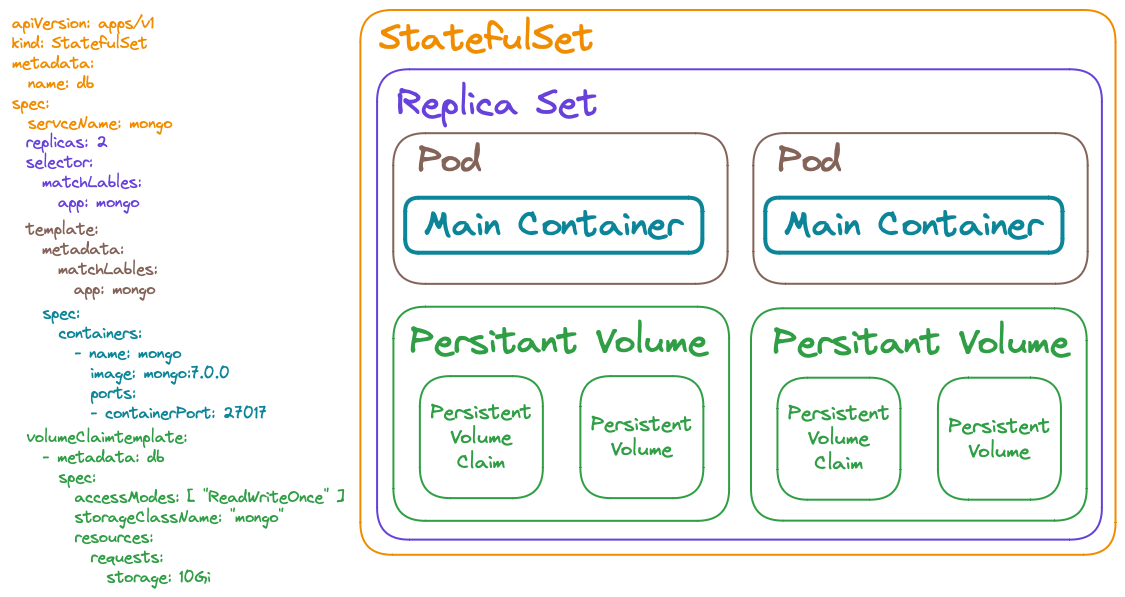
- Stateful Sets - Stateful application that needs to mount data
- Replica Set - Deploy multiple pods in sequence
- Persistent Volume - Requires volume for application
Istio
Use Service Mesh to mange Kubernetes traffic, security, and observability.
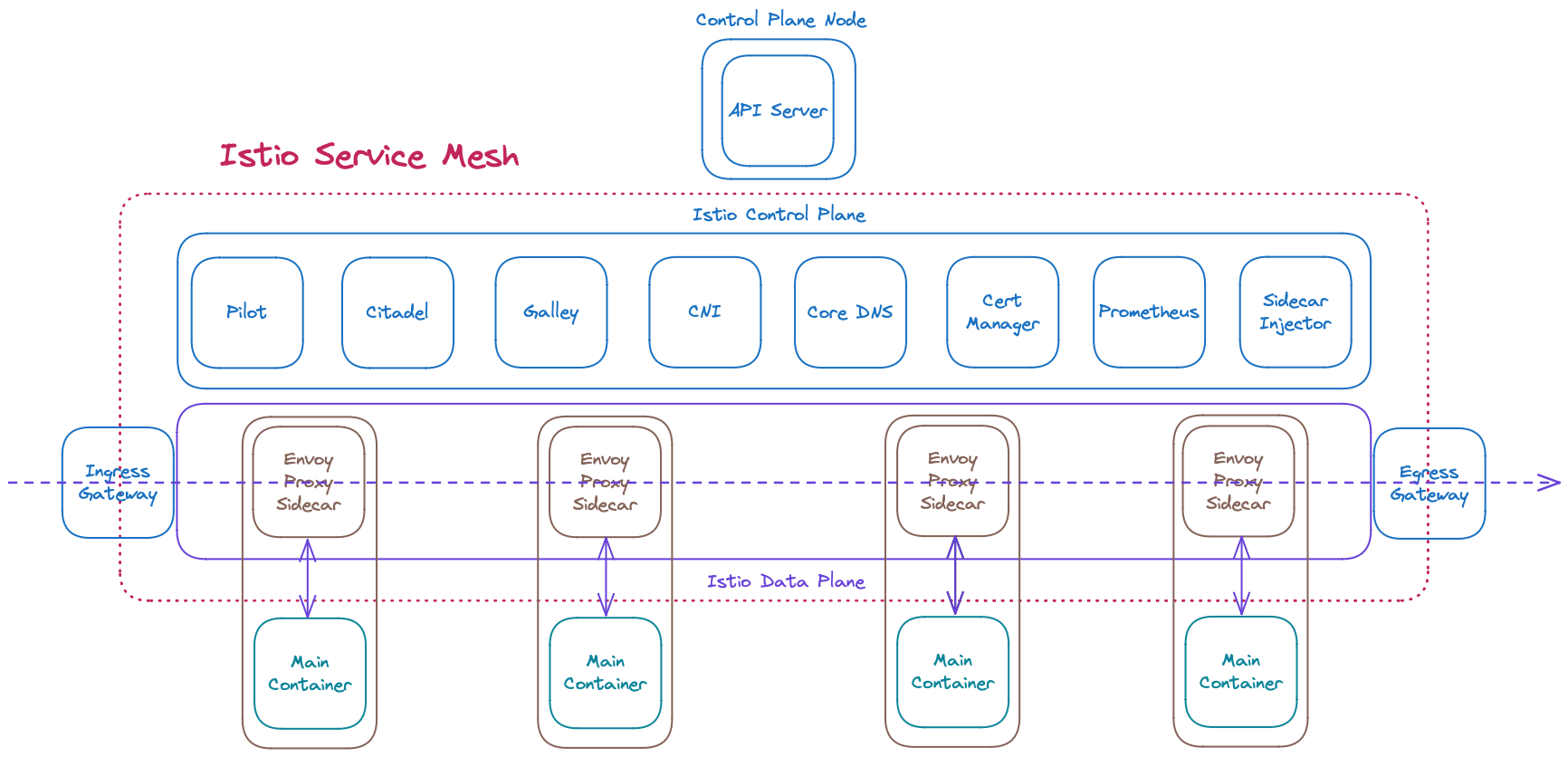
Control Plane
- Pilot - Service Discovery and configuring sidecar proxies
- Citadel - Automated key and certificate management
- Galley - Validate and deploy Istio configuration
- Container Network Interface (CNI) - Network initialization, init container to sidecar proxy
- Core DNS - DNS resolution
- Policy - CDA Policy enforcer
- Cert Manger - Issue and renew TLS certifications
- Prometheus - Metrics collector
- Sidecar Injector - Namespace enabled sidecar poxy
- Ingress Gateway - Handle incoming traffic into mesh
- Egress Gateway - Handle outgoing traffic from mesh
Data Plane
- Envoy - Reverse Proxy Sidecar managed by Traffic management rules
Traffic Management
- Virtual Services - Configure how requests are routed to service in mesh. Timeout, retry, and fault injection
- Destination Rules - Policies on routing, load balancing, TLS, circuit breaker, etc
- Gateways - Handle Ingress/Egress traffic to/from mesh
- Service entries - Register services to be added and discovered in Mesh
- Sidecars - Add additional proxy rules on in/e-gress
Security
- Peer Authentication (Mutual TLS) - Client and Server Envoy sidecar establish two TLS tunnel
- Request Authentication (JWT) - Envoy validate JWT with Public JSON Web Key Set (JWKS)
- Authorization Policies - Envoy engine handle Custom, Deny, Allow policies on traffic rules
Observability
- Metrics
- Proxy - In/E-gress Traffic: volume, errors, response times
- Service - Latency, errors, saturation
- Control plane - Service regulations, Certs
- Distributed Traces - Sample traffic for monitoring/debugging
- Access Logs - Envoy access logs