Multi-thread with nodejs


Node.js is a very powerful server-side javascript framework that excels in single-thread asynchronous I/O and is constantly updating with new features.
This guide is meant to be a resource to understand the multi-threading APIs and provide:
- High-level computer science concepts
- Code examples of node.js API and performance metrics
Synchronous vs Asynchronous
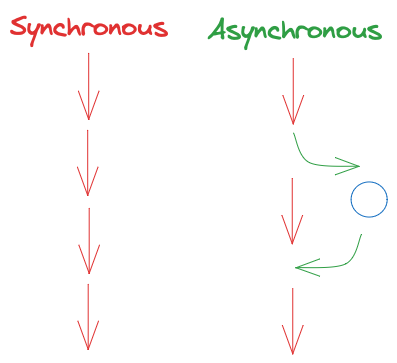
- Synchronous - Operations are expected to start and finish in a time span.
- Asynchronous - Operations can be deferred till a later time.
Concurrency
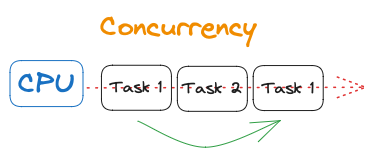
- Concurrency - Multiple operations are handled at the same time.
Sequential vs Parallel
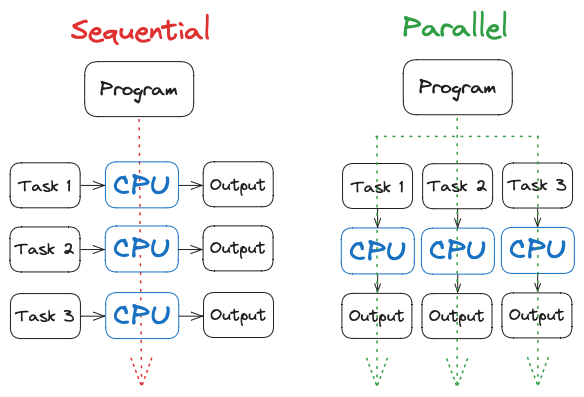
- Sequential - Multiple operations are done in a linear fashion.
- Parallel - Multiple operations are done at the same time.
Distributed
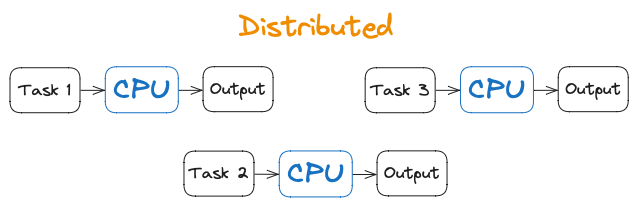
- Distributed - Multiple operations are done independently on segmented resources.
Process vs Thread
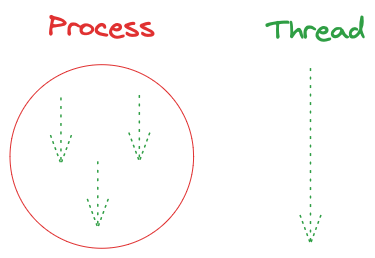
- Process - A program can use single or multiple threads.
- Thread - Code execution is invoked and uses less resources than a process.
Javascript Engine
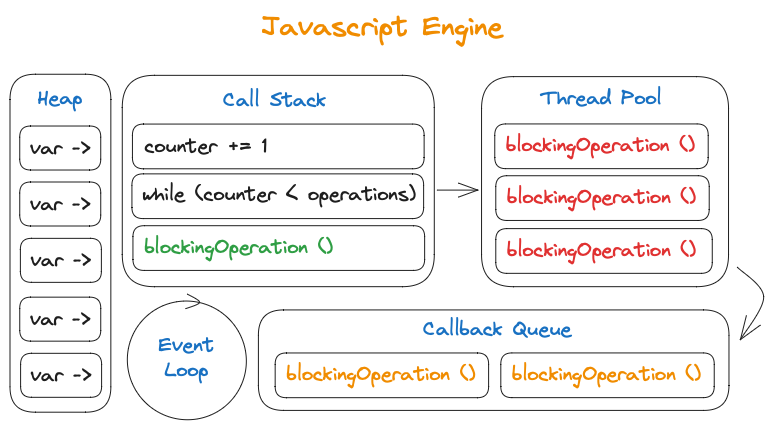
- Javascript Engine - Node.js process runs on top of the google chrome v8 engine.
- Heap - Memory management of variables.
- Call Stack - Code running on main thread.
- Thread Pool - Async code pending to be executed.
- Callback Queue - Async code ready to be executed.
- Event Loop - Async code is pushed on to empty call stack.
Thread Blocking Operation
Here is an example of a long running operation that will increment a counter variable from 'zero' to 'ten billion'.
The snippet of code will block all other operations on the thread since it is a 'synchronous' operation.
- ex: web browser freezes after clicking a button.
- ex: locking a database record when making an update.
Prerequisite
- node -v @12+
echo '{ "type": "module" }' > package.json
const blockingOperation = (operations = 10_000_000_000) => {
    let counter = 0;

    while (counter < operations) counter += 1;

    console.log({ counter });

    return counter;
};

(() => blockingOperation())();
time node index.js
{ counter: 10000000000 }
node index.js 7.80s user 0.04s system 99% cpu 7.849 total
- Executing this program takes around
~8seconds.- Running on a single CPU core (
single-thread). Synctasks are blocking the thread.
- Running on a single CPU core (
Split Operation into Async Tasks
Building on the example, we introduce Promises to invoke asynchronous operations.
In addition, the large operation will be split based on the number of CPU cores on the machine.
- This chunking strategy will shorten the task's size of operations.
tasks = (operations / threads)
Async will allow the program to handle concurrent operations.
- ex: web server accepting multiple API requests.
- ex: video game accepting multiple clicks on a keyboard.
import { cpus } from 'os';

const getUTCSeconds = () => new Date().getUTCSeconds();

const blockingOperation = (operations) => new Promise((resolve) => {
    let counter = 0;

    while (counter < operations) counter += 1;

    console.log({ counter, utcSecond: getUTCSeconds() });

    resolve(counter);
});

const splitOperationIntoAsyncTasks = async () => {
    const operations = 10_000_000_000;
    const threads = cpus().length;
    const tasks = (operations / threads);

    const blockingOperations = new Array(threads).fill()
        .map(() => blockingOperation(tasks))

    const countOperations = await Promise
        .all(blockingOperations);

    const totalCount = countOperations
        .reduce((sum, counter) => (sum + counter), 0);

    console.log({ operations, threads, tasks, totalCount });

    return totalCount;
};

(async () => splitOperationIntoAsyncTasks())();
time node index.js
{ counter: 1250000000, utcSecond: 21 }
{ counter: 1250000000, utcSecond: 22 }
{ counter: 1250000000, utcSecond: 22 }
{ counter: 1250000000, utcSecond: 23 }
{ counter: 1250000000, utcSecond: 23 }
{ counter: 1250000000, utcSecond: 24 }
{ counter: 1250000000, utcSecond: 24 }
{ counter: 1250000000, utcSecond: 25 }
{
  operations: 10000000000,
  threads: 8,
  tasks: 1250000000,
  totalCount: 10000000000
}
node index.js  4.35s user 0.02s system 99% cpu 4.372 total
- Executing this program takes around
~4seconds. - We see a
50%performance improvement.- Running on a single CPU core (
single-thread). Asynctasks are processed insequential.
- Running on a single CPU core (
Invoke Multi Thread Operations
The final step is to introduce the multi-thread API worker threads.
There are two concepts that are at play:
- Parent (main thread)
if (isMainThread) return new Worker(__filename)
- Child (worker thread)
parentPort.postMessage(await blockingOperation())
The parent will create multiple children and wait for the messages to be returned.
import { cpus } from 'os';
import { dirname } from 'path';
import { fileURLToPath } from 'url';
import { isMainThread, Worker, parentPort } from 'node:worker_threads';

const __filename = dirname(fileURLToPath(import.meta.url));

const createWorker = async () => new Promise ((resolve, reject) =>
    new Worker(__filename)
        .on('message', (data) => resolve(data))
        .on('error', (error) => reject(error))
        .on('exit', (code) => { if (code !== 0) reject(new Error(`Thread exit code: ${code}`)); }));

const getUTCSeconds = () => new Date().getUTCSeconds();

const blockingOperation = (operations) => new Promise((resolve) => {
    let counter = 0;

    while (counter < operations) counter += 1;

    console.log({ counter, utcSecond: getUTCSeconds() });

    resolve(counter);
});

const runTaskInParallel = async (operations, threads, tasks) => {
    const blockingOperations = new Array(threads).fill()
        .map(() => createWorker(tasks));

    const countOperations = await Promise
        .all(blockingOperations);

    const totalCount = countOperations
        .reduce((sum, counter) => (sum + counter), 0);

    console.log({ operations, threads, tasks, totalCount });

    return totalCount;
};

const invokeMultiThreadOperations = async () => {
    const operations = 10_000_000_000;
    const threads = cpus().length;
    const tasks = (operations / threads);

    if (isMainThread) return runTaskInParallel(operations, threads, tasks);

    parentPort.postMessage(await blockingOperation(tasks));
};

(async () => invokeMultiThreadOperations())();
time node index.js
{ counter: 1250000000, utcSecond: 59 }
{ counter: 1250000000, utcSecond: 59 }
{ counter: 1250000000, utcSecond: 59 }
{ counter: 1250000000, utcSecond: 59 }
{ counter: 1250000000, utcSecond: 59 }
{ counter: 1250000000, utcSecond: 59 }
{ counter: 1250000000, utcSecond: 59 }
{ counter: 1250000000, utcSecond: 59 }
{
  operations: 10000000000,
  threads: 8,
  tasks: 1250000000,
  totalCount: 10000000000
}
node index.js  6.38s user 0.05s system 711% cpu 0.903 total
- Executing this program takes around
~1second. - We see a
87%performance improvement.- Running on a multi CPU core (
multi-thread). Asynctasks are processed inparallel.
- Running on a multi CPU core (